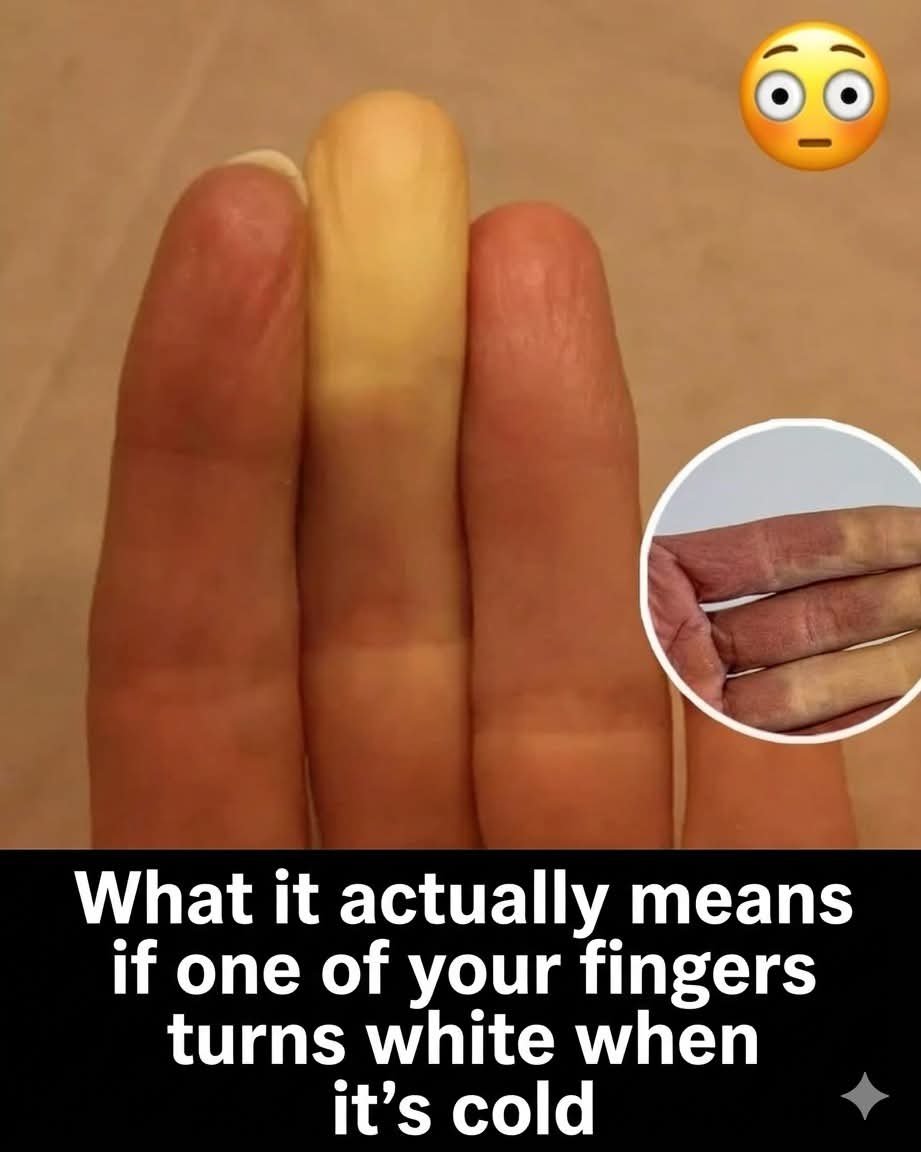
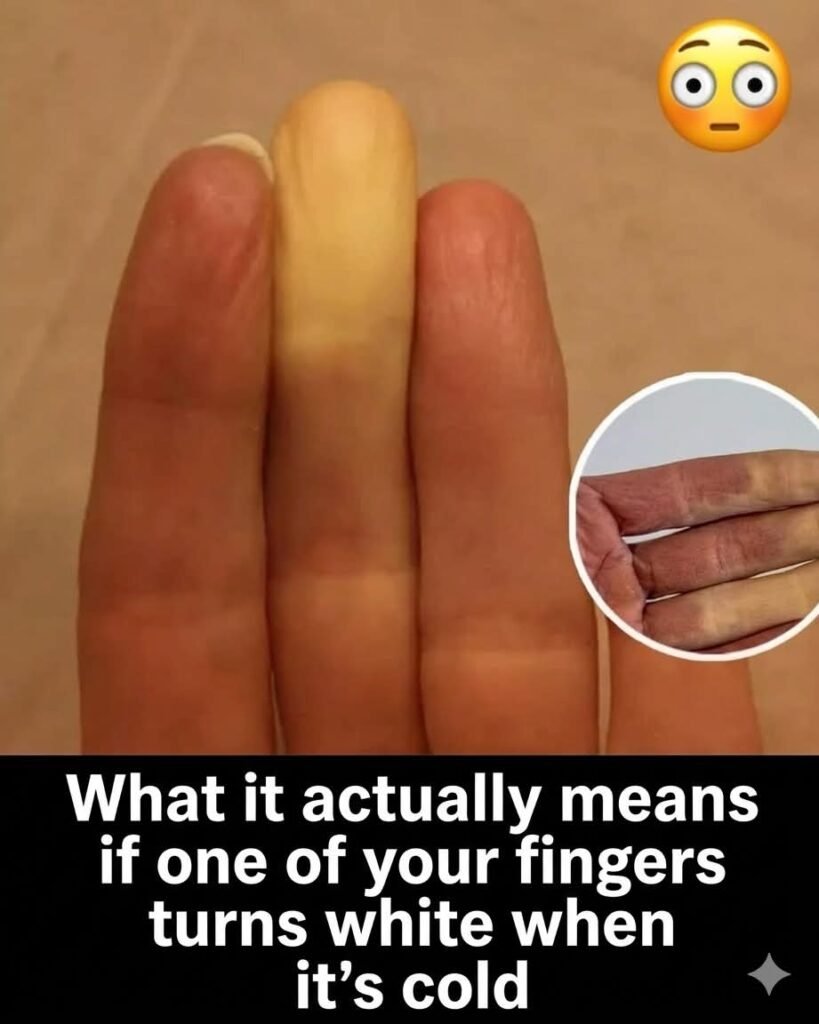
If one or more of your fingers turn white in the cold, it most commonly means a condition called Raynaud’s phenomenon.
🧊 What’s happening in your body
When exposed to cold (or sometimes stress), the small blood vessels in your fingers suddenly narrow (spasm).
This reduces blood flow → fingers turn white
Then they may turn blue (low oxygen)
Finally red as blood flow returns
—
✋ Common symptoms
Fingers turning white or pale in cold weather
Numbness or tingling
A “pins and needles” feeling as they warm up
Sometimes mild pain
—
👩⚕️ Is it serious?
Usually harmless (primary Raynaud’s)
But in some cases, it can be linked to other conditions like autoimmune disease (secondary Raynaud’s)
—
⚠️ When to see a doctor
Severe pain or ulcers on fingers
Symptoms affecting only one hand or worsening over time
Signs of underlying illness (joint pain, skin changes, etc.)
—
✔️ How to manage it
Keep hands warm (gloves, warm water)
Avoid sudden temperature changes
Reduce stress
Avoid smoking (it constricts blood vessels)
—
🧠 Bottom line
White fingers in the cold usually mean temporary reduced blood flow due to vessel spasm—most often Raynaud’s phenomenon—and it’s often manageable with simple precautions.