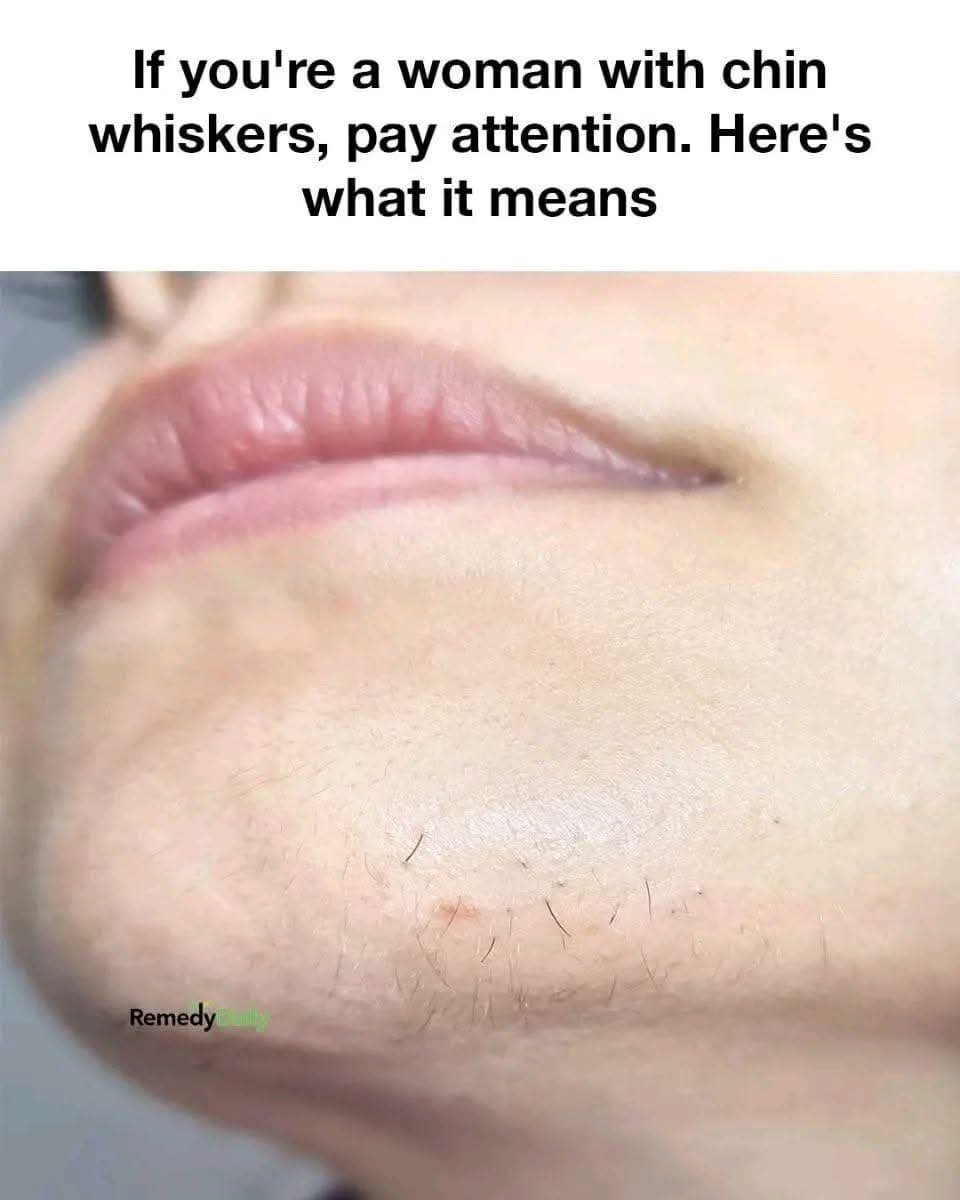
Chin whiskers—those coarse hairs that grow on the chin, especially in women—can sometimes be more than just a cosmetic concern. While a few stray hairs are completely normal, noticeable or increasing growth may hint at underlying hormonal or health-related factors.
1. Hormonal Imbalance
The most common cause is a shift in hormones—particularly higher levels of androgens (male hormones like testosterone). This can lead to thicker, darker facial hair.
2. Polycystic Ovary Syndrome (PCOS)
PCOS is one of the leading medical causes of excess facial hair in women. It often comes with other symptoms like:
Irregular periods
Acne
Weight gain
Fertility issues
3. Aging and Menopause
As estrogen levels drop with age—especially during menopause—testosterone can have a stronger effect, leading to more visible chin hair.
4. Genetics
Sometimes, it’s simply hereditary. If women in your family have chin whiskers, you’re more likely to have them too.
5. Certain Medications
Drugs that affect hormone levels (like steroids or some hormone therapies) can trigger increased facial hair growth.
6. Rare Medical Conditions
In rare cases, excessive facial hair (called hirsutism) may be linked to conditions like adrenal gland disorders or tumors that affect hormone production.
When to Pay Attention
You might want to check with a doctor if:
Hair growth is sudden or rapidly increasing
It’s accompanied by other symptoms (deep voice, hair thinning, irregular periods)
It’s causing distress or affecting your quality of life
Bottom Line
A few chin hairs are usually harmless. But if the pattern changes or becomes more pronounced, it could be your body signaling a hormonal shift worth investigating.