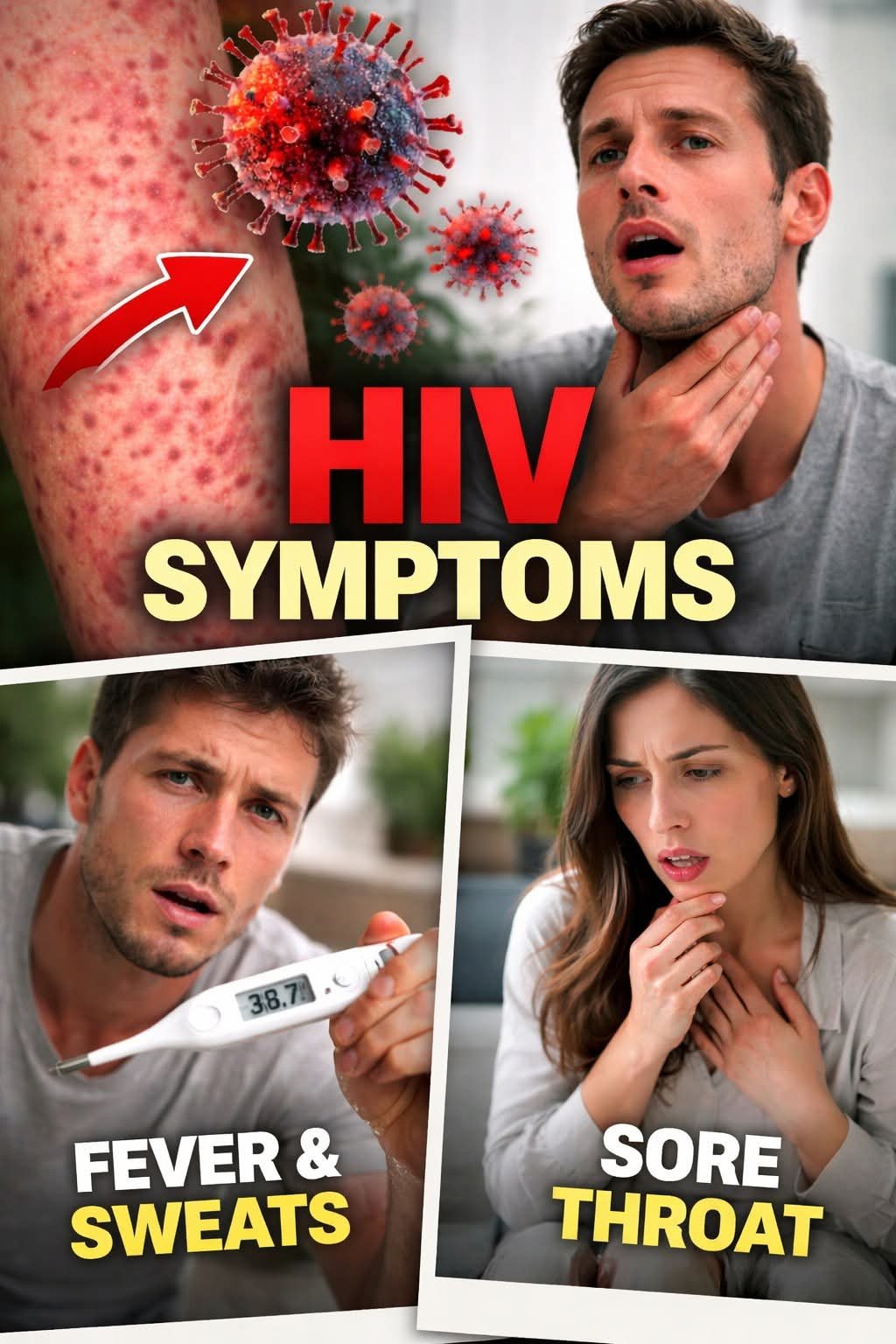
HIV can be tricky because many early symptoms are mild or look like common illnesses. Some people have no symptoms at all. That’s why testing—not symptoms alone—is the most reliable way to know your status.
1. Flu-Like Illness
Fever, sore throat, body aches, and fatigue a few weeks after exposure can be part of early infection.
2. Swollen Lymph Nodes
Tender, enlarged Lymph nodes in the neck, armpits, or groin.
3. Skin Rash
A red, flat or slightly raised rash on the torso, face, or limbs.
4. Night Sweats
Waking up drenched in sweat without a clear reason.
5. Persistent Fatigue
Unusual tiredness that doesn’t improve with rest.
6. Mouth Ulcers or White Patches
Sores or a white coating in the mouth (sometimes called oral thrush).
7. Unexplained Weight Loss
Gradual weight loss without trying.
8. Diarrhea Lasting More Than a Week
Ongoing digestive issues without a clear cause.
9. Frequent Infections
Repeated colds or infections as the immune system weakens.
10. Fever That Keeps Returning
Low-grade fever that comes and goes.
Final Thought
These signs can be caused by many other conditions. If you’ve had a potential exposure, the best step is to get tested at the appropriate time and speak with a healthcare professional. Early diagnosis and treatment allow people with HIV to live long, healthy lives.