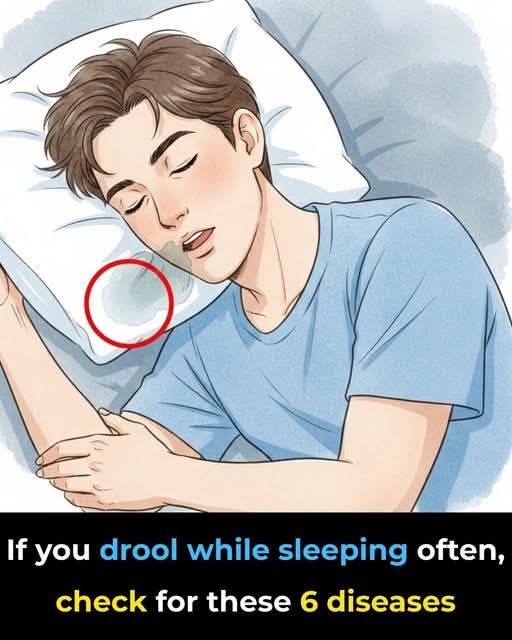
That viral claim is misleading. Drooling during sleep is usually normal and not a sign of anything serious happening in your brain.
Why Drooling Happens
Drooling occurs when saliva isn’t swallowed during sleep. This can happen for simple reasons like:
Sleeping on your side or stomach
Deep, relaxed sleep
Nasal congestion (forcing mouth breathing)
Temporary muscle relaxation in the face
None of these automatically point to a brain problem.
When It Could Be a Medical Issue
In some cases, excessive drooling may be linked to conditions like sleep apnea, allergies, or sinus infections. Rarely, persistent drooling while awake (not just during sleep) can be associated with neurological conditions—but that’s very different from occasional nighttime drooling.
Common Myth About the Brain
You might see claims saying drooling means your brain is “fully relaxed” or “not functioning properly.” There’s no scientific evidence supporting these ideas. Sleep stages are complex, and drooling alone doesn’t reveal anything specific about brain health.
When to Pay Attention
Consider speaking to a doctor if drooling is:
Excessive or worsening over time
Paired with loud snoring or breathing pauses
Happening during the day as well
Accompanied by difficulty swallowing
Bottom Line
Drooling in your sleep is usually harmless and often just related to sleep position or congestion—not your brain. Viral “see more” claims tend to exaggerate normal body behaviors into something alarming.