Your feet can reveal a lot about your overall health. Changes in color, sensation, or appearance aren’t always just minor issues—they can sometimes point to deeper medical conditions that shouldn’t be ignored.
1. Persistent Cold Feet
If your feet are often cold, even in warm conditions, it may indicate poor blood circulation. This can sometimes be linked to conditions like Peripheral Artery Disease, where blood flow to the limbs is reduced.
2. Swelling (Edema)
Swollen feet can result from standing too long, but persistent swelling may signal issues with the heart, kidneys, or veins. It can also be associated with Heart Failure if accompanied by other symptoms.
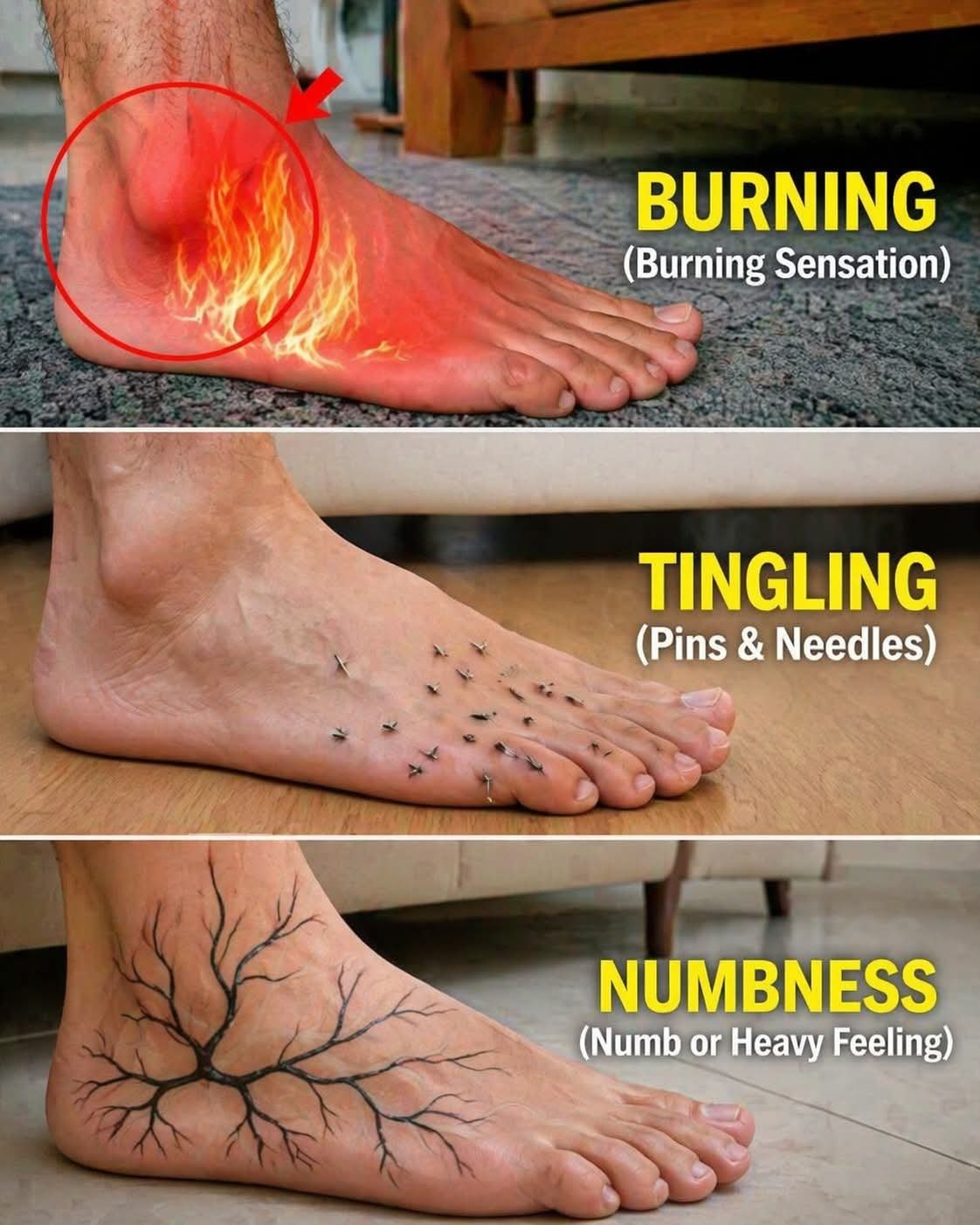
3. Numbness or Tingling
A “pins and needles” feeling may be caused by nerve damage. One common cause is Diabetic Neuropathy, especially in people with uncontrolled blood sugar levels.
4. Heel Pain
Ongoing heel pain, particularly in the morning, might be due to Plantar Fasciitis. This condition involves inflammation of the tissue connecting the heel bone to the toes.
5. Cracked or Dry Skin
While dry skin can be harmless, severe cracking may point to dehydration, skin conditions, or even thyroid problems like Hypothyroidism.
6. Discoloration (Blue or Pale Feet)
Feet that appear bluish or pale may indicate poor oxygen supply or circulation problems. This can sometimes be related to conditions such as Raynaud’s Disease.
7. Thick or Discolored Toenails
Changes in toenails could be a sign of fungal infection or, in some cases, systemic issues. A common cause is Onychomycosis.
8. Slow-Healing Wounds
Cuts or sores on the feet that take a long time to heal can be a warning sign of diabetes or poor circulation, increasing the risk of infection.
9. Burning Sensation
A burning feeling in the feet may be linked to nerve problems, vitamin deficiencies, or conditions like Peripheral Neuropathy.
Final Thought
While these symptoms don’t always mean something serious, they shouldn’t be ignored if they persist. Your feet can act as an early warning system for your body, so paying attention to changes and seeking medical advice when needed is a smart move.