Headlines like this can sound alarming, but they’re often oversimplified. Some medications can affect memory or thinking, especially in older adults—but this usually depends on dose, combinations, and individual sensitivity, not just the drug itself.
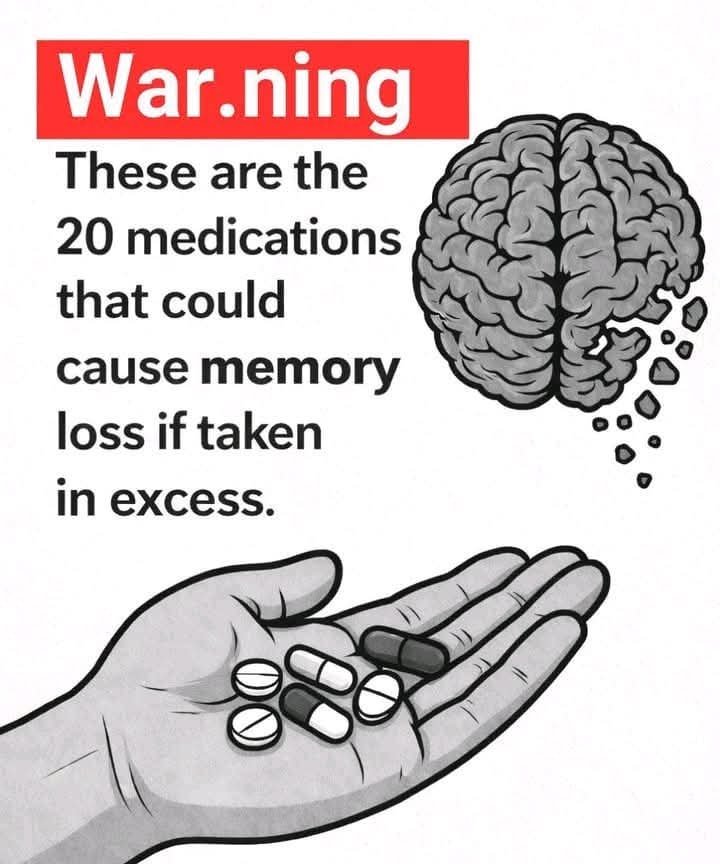
Memory problems can sometimes resemble early signs of Alzheimer’s disease, but medication-related issues are often reversible once the cause is addressed.
Types of Medications Linked to Memory Issues
Here are common categories (not an exhaustive list) that may affect memory in some people:
1. Sleep Aids and Sedatives
Drugs like benzodiazepines (used for anxiety or insomnia) can slow brain activity, leading to forgetfulness or confusion—especially with long-term use.
2. Anticholinergic Medications
These are found in some allergy, cold, and bladder medications. They can interfere with brain signals related to memory and learning.
3. Certain Antidepressants
While many are safe and effective, some older types may cause cognitive side effects in certain individuals.
4. Strong Pain Medications
Opioids can affect alertness, concentration, and short-term memory.
5. Blood Pressure or Heart Medications
In some cases, these may cause dizziness or mental “fog,” particularly when starting or adjusting doses.
6. Anti-Seizure Drugs
These can sometimes slow cognitive processing or affect recall.
Important Things to Understand
Not everyone will experience memory problems from these medications. Risks increase with:
Higher doses
Taking multiple medications together
Older age
Underlying health conditions
What You Should Do
If you notice memory issues after starting a medication:
Don’t stop it suddenly on your own
Talk to your doctor about possible alternatives or dose adjustments
Review all medications you’re taking (including over-the-counter ones)
Bottom Line
Some medications can contribute to memory problems, but the idea of a fixed “dangerous 20” list is misleading. With proper medical guidance, most risks can be managed safely without unnecessary fear.