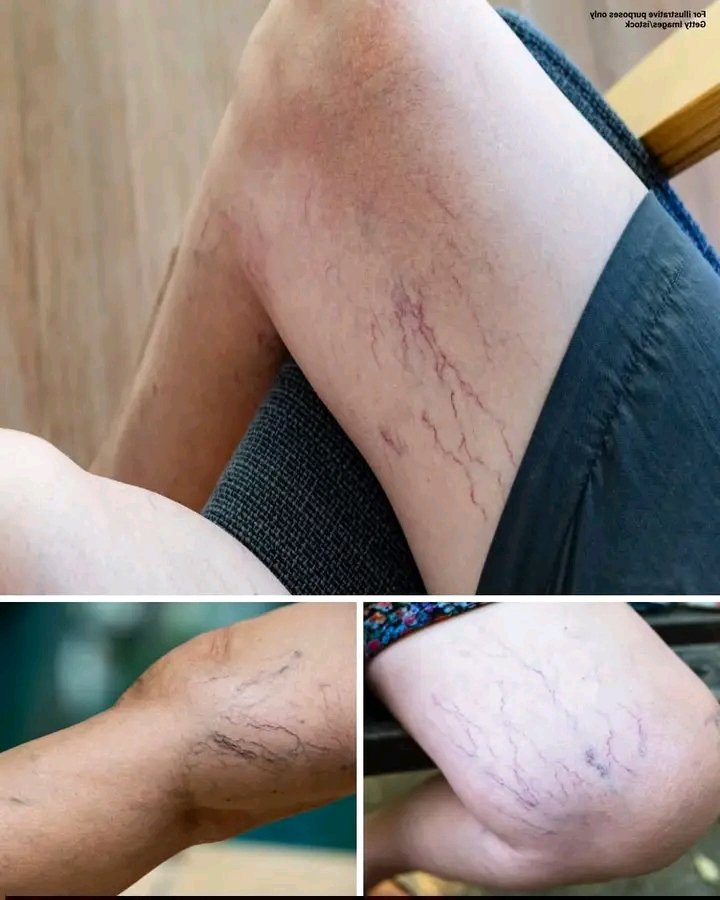
Purple or bluish veins that become visible under the skin are very common, especially on the legs. While they are often harmless, they can sometimes be a sign that blood is not flowing properly through the veins. Paying attention to these changes can help you take better care of your health.
Why Purple Veins Appear
Purple veins usually appear when veins become enlarged or weakened. This can happen because of aging, standing for long periods, lack of exercise, weight gain, or family history. In many cases, these visible veins are known as spider veins or varicose veins.
They often show up on the legs because the veins there work harder to push blood back toward the heart.
Common Symptoms That May Appear
Some people only notice the color of the veins, while others may also experience discomfort. Symptoms can include:
Leg heaviness
Swelling around the ankles
Burning or itching sensations
Muscle cramps at night
Tired or aching legs after standing
If the veins become painful or swollen, medical advice may be helpful.
Simple Habits That Can Help
Regular movement and exercise can improve blood circulation and reduce pressure on the veins. Elevating your legs, drinking enough water, and avoiding sitting or standing for too long may also help.
Wearing comfortable clothing and maintaining a healthy weight can reduce strain on the veins over time.
Don’t Ignore Changes in Your Legs
Visible purple veins are often harmless, but sudden changes, pain, or severe swelling should never be ignored. Paying attention to early signs can help you protect your circulation and keep your legs healthy for years to come.