Endometriosis is a common but often misunderstood condition that many women live with for years before getting diagnosed. Knowing the signs early can make a big difference.
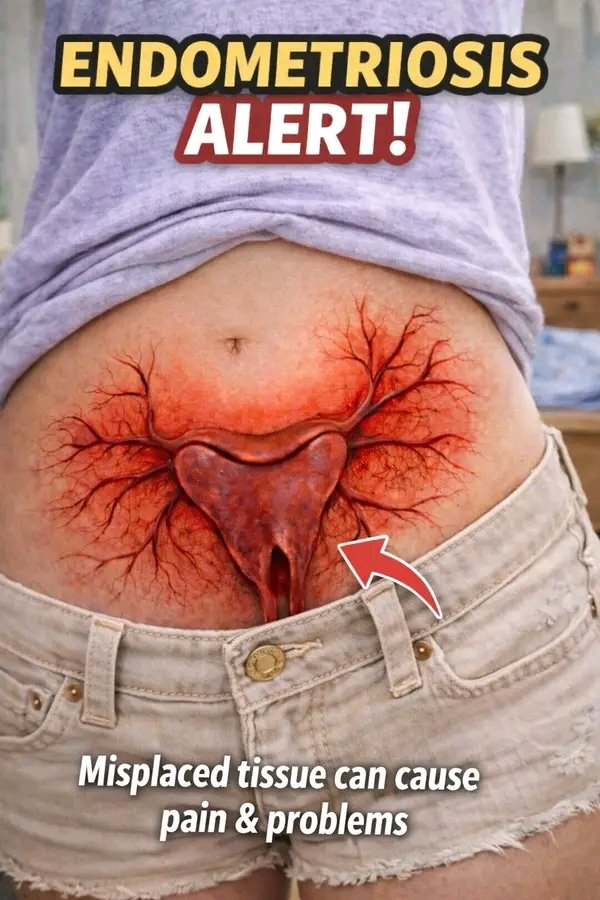
What is it?
Endometriosis happens when tissue similar to the lining of the uterus (endometrium) grows outside the uterus—on the ovaries, fallopian tubes, or other pelvic organs.
This tissue still responds to hormonal changes, which can lead to pain, inflammation, and scarring.
—
⚠️ Key symptoms to watch for
Not all women have the same symptoms, but common ones include:
Severe period pain (worse than typical cramps)
Chronic pelvic pain (even outside your period)
Pain during or after sex
Heavy or irregular periods
Pain when using the bathroom (especially during menstruation)
Difficulty getting pregnant
Some women also experience fatigue, bloating, or nausea.
—
❗ Why it’s often missed
Endometriosis is frequently underdiagnosed because:
Painful periods are often normalized
Symptoms overlap with other conditions
Diagnosis may require imaging or even minor surgery
On average, diagnosis can take years.
—
🧬 Possible complications
If untreated, it can lead to:
Fertility issues
Chronic pain
Scar tissue (adhesions)
Ovarian cysts (endometriomas)
—
🩺 How it’s managed
There’s no single cure, but treatments can help:
Medical options
Pain relievers
Hormonal therapy (birth control, hormone suppression)
Surgical options
Removal of endometrial-like tissue in more severe cases
—
🌿 Lifestyle support (helps but doesn’t replace treatment)
Anti-inflammatory diet
Regular gentle exercise
Stress management
Heat therapy (like heating pads)
—
🚨 When to see a doctor
Don’t ignore symptoms like:
Pain that interferes with daily life
Period pain that keeps getting worse
Trouble conceiving
—
💬 Important truth
Severe period pain is not something you should just “live with.”
If your pain feels extreme or unusual, it deserves medical attention.